Unplugged & Empowered: Navigating Technostress with Dr. Ashley Hass
In a world where digital marketers are expected to be "always on," the line between professional engagement and personal burnout has become increasingly blurred. Dr. Ashley Hass, a marketing professor at the University of Portland and co-founder of the [Dis]Connect Collective, explores the intersection of digital marketing and "technostress"—the modern struggle to cope with screen time in a healthy manner.
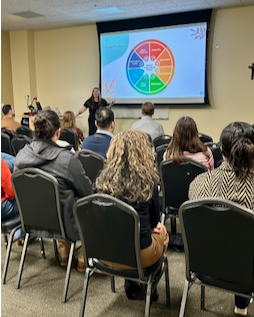
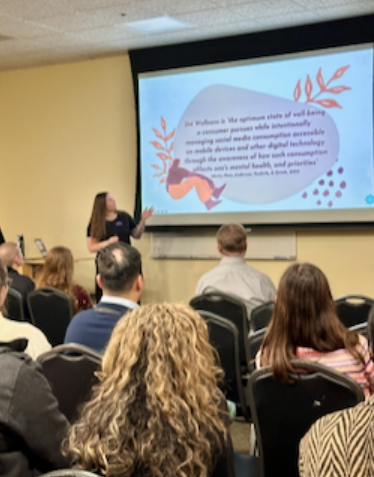
Dr. Hass recently spoke to our AMA community about this very challenge during Combating Technostress: Tools for the Always-On Marketer on February 11th. Ahead of the presentation, we sat down with her to discuss how marketers can reclaim their focus and attention.
AMA: To start, could you tell us a bit about your background and how you became interested in digital wellness?
Dr. Hass: My journey began in collegiate volleyball coaching, but I eventually transitioned into academia. My research interest started with influencer marketing back in 2016. During the pandemic, as I focused on my own well-being, I realized that people didn't just want to talk about influencers; they wanted to talk about the "love-hate relationship" they had with their phones. I noticed that many, including myself, felt a complete lack of control over their own digital behaviors, which led me to study the neuroscience behind these habits and how we can empower ourselves to choose how we spend our time.
AMA: Marketers are often at a higher risk for technostress and burnout because our jobs require us to be online. How do we find a balance when unplugging isn't an option?
Dr. Hass: It starts with awareness. I recommend monitoring your screen time and seeing at what point anxiety begins to ramp up. For me, I’ve found my anxiety threshold is between 2.5 and 4.5 hours. If I go over that, I feel it. That said, it’s not about unplugging completely; it’s about balancing social media time with rest time.
For marketers, it’s about creating boundaries, but it’s also highly individual. A few hard and fast rules do exist, such as keeping phones out of the bedroom. Some may feel most productive using “Do Not Disturb” modes while others need to take consistent breaks. I love to clear my mind by taking a 20 minute walk outside with my dogs. I don’t have any headphones in, so I enjoy listening to the birds. It’s not much, but every little bit will help when you’re looking at your stress levels.
AMA: Marketers often wear multitasking as a badge of honor to get ahead, but you mention the dangers of task switching and something called filter failure. How do these actually impact our creativity?
Hass: Research shows only 2% of the world can actually multitask! The rest of us are just overestimating ourselves. I have found that time chunking is much more effective. When we media-multitask, especially with short form content, the constant dopamine hits tax the prefrontal cortex and the amygdala.
That is where filter failure happens. Our productivity drops and our creativity vanishes because our brains are stuck in a stress response. Your amygdala is on fire like you are being chased by a bear, but you are really just trying to finish a content strategy. Eventually, that stress debt or allostatic load catches up to you. In my own life I hit a point where my body literally told me that I could not work and digest food at the same time anymore. I had to figure it out and stop the 16 hour work days. We think we are being productive by burning the candle at both ends, but we are actually just stressed out.
AMA: In your presentation you talk about "Stress Resilience Deposits." What are some practical examples for a busy professional?
Dr. Hass: If someone told me I could build stress resilience by taking a break and writing down three things I was grateful for, I’d probably write them off and assume it’s not going to help. But honestly, neuroscience backs it up; our brains need those breaks.
It’s about making "deposits" into your resilience bank. Going for a walk is one of the most underutilized tools we have; stop, feel your feet, and just be for a few moments. Even a 10-minute stroll to the mailbox gives your eyes a break from screen strain. You could also call a friend—maybe skip FaceTime to rest your eyes—or try the ".B" (dot B) method when you start to feel overwhelmed. That process was designed for kids, but adults need it just as much. The digital impact on our brains is universal, even if the research is still catching up. Also, don’t try to do it all at once. Just pick one thing and go from there. Think of it as a small, intentional reset.
AMA: Are there changes we can make to our physical space to improve focus?
Dr. Hass: As a certified digital wellness educator through the Digital Wellness Institute, I look at different dimensions of physical space, like the ergonomics of your chair, your ability to sit up straight, and your flexibility to stand up and stretch. Also, research shows that if your phone is just sitting on your desk or in your pocket, your productivity can drop by at least 25%. I’m a big fan of new technologies and apps like Brick, ScreenZen, and Forest, which can help break the dopamine hit from distracting devices or sites.
AMA: During your workshop, you ask participants to write a letter to their 12-year-old selves. What would you tell your younger self?
Dr. Hass: My hard work paid off, but it didn't have to be that stressful. Social media and tech made me feel like I wasn't in control of my own behavior. I wish I could tell my younger self to just slow down and reflect. Go hug a tree, the anxiety will pass. You don't have to do "mainstream" meditation if it doesn't fit; I'm good at just watching a candle. The most important thing is to listen to what your body actually needs.
To learn more about Dr. Ashley Hass’ research on digital wellness, visit www.ashleyhass.com.
Additional Resources:
Rewired: Protecting Your Brain in the Digital Age by Dr. Carl Marci, MD
The Anxious Generation by Jonathan Haidt
Jonathan Haidt’s Substack