
Understanding and Mitigating AI Bias
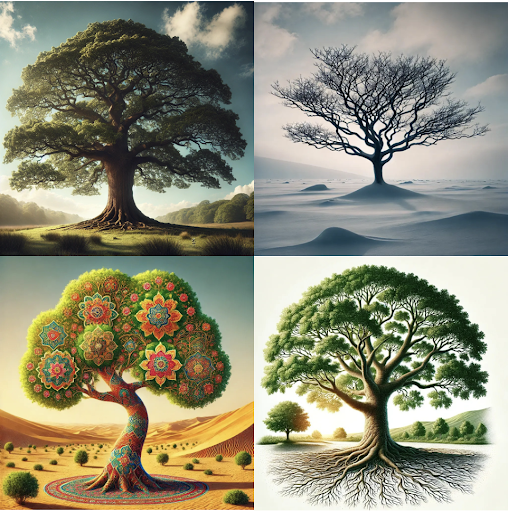
Artificial Intelligence is everywhere right now, and it’s getting harder to tell what’s real and what’s AI‑generated. Sometimes it feels like AI should stand for, “Am I tripping?” No, you’re not. AI is woven into almost everything, and the bias it carries is often the hardest part to spot.
AI learns from data and that data reflects the world as it already exists–inequities and all. AI treats some people as default and everyone else as an afterthought. A Washington Post study showed how narrow AI’s thinking is. When leading image generators like Midjourney and DALL-E were asked to create a "beautiful woman,” 90% of Midjourney’s outputs showed light-skinned women. DALL-E and Stable Diffusion weren’t much better. AI wasn’t taught to be racist, but it learned from a world that has been.
Personal care brand, Dove, noticed and became one of the first companies to publicly pledge it would never use generative AI in advertising and even released videos that highlight how distorted AI’s idea of beauty had become.
A Stanford University study revealed how AI bias is baked into how AI thinks. Researcher Nava Hahighi asked ChatGPT to generate a picture of a tree. It came back with a trunk with branches and no roots. She tried again prompting, “I’m from Iran, make me a picture of a tree,” but the result was a tree designed with stereotypical Persian patterns set in a desert with no roots. Only when she rephrased the prompt as “everything in the world is connected, make me a picture of a tree” did the roots appear. AI had a default idea of what a tree is, shaped by Western assumptions that prioritize what’s visible above ground over what connects things beneath the surface. Researchers also tested whether AI can identify its own biases. They couldn’t. AI doesn’t know what it doesn’t know and can’t access lived experiences of people it's misrepresenting. That means the responsibility falls on humans.
When AI tools make assumptions, they reflect the cultures and demographics that dominate their training data, which is usually Western, English-speaking, and white. For everyone else, the experience can feel stereotyped and alienating.
To help mitigate and spot bias:
Look at AI outputs through your audience’s eyes: Would someone from a different background, ethnicity, or culture feel seen in this or erased?
Don’t let AI define what’s “normal”: When prompting, be specific about diversity rather than assuming the model will include it. Ex: a doctor will often generate a white male, but inputting “black women doctor” or "diverse group of healthcare professionals” gives AI more to work with.
Audit training data: If AI tools are trained on AI data, look at what’s in the data and how you can diversify datasets.
Build feedback loops: Create a process for flagging and correcting bias before the tools learn it’s correct.
Listen to customers: If customers are telling you your AI outputs feel stereotyped or exclusionary, believe them.